
Pavane by Gabriel Fauré for Classical Ukulele
Introduction
Gabriel Fauré’s Pavane (Op. 50), has a long, unbroken melodic line and a restrained sense of motion that suits the classical ukulele especially well. In this low-G arrangement, the piece sits in A minor rather than the original F-sharp minor, but it still depends on the same balance that gives the work its character: a singing melody over a soft, steady accompaniment. Fauré first wrote the piece in 1887, and it remains one of his best-known works.
On ukulele, you need to shape the melody clearly without making the accompaniment heavy. The right hand has to support long lines, measured dynamic changes, and a range of textures, from flowing arpeggios to muted pizzicato. The left hand has to preserve sustain wherever possible so the music does not become dry or chopped up. At a moderate tempo of about 65 bpm, the piece should move forward, but never sound rushed.
Background on Fauré and the Original Composition
Gabriel Fauré was born in 1845 and became one of the central figures in French music at the end of the nineteenth century. His music is known for its refinement, economy, and subtle harmonic language. He wrote songs, chamber music, piano music, choral music, and orchestral works, and his style had a strong influence on later French composers.
The Pavane, Op. 50, was composed in 1887. It began as a piano work and later became widely known in its orchestral version, with an optional choral part added afterward. The title refers to the pavane, a slow court dance associated with Renaissance Spain. Fauré used that title to suggest a certain elegance and calm pacing, but the piece speaks in his own musical language. It was first performed in Paris in 1888 and quickly became one of his most popular compositions. It was also dedicated to Countess Élisabeth Greffulhe, an important patron in Parisian musical life.
Part of the appeal of the Pavane is its contrast between simplicity and control. The main melody is memorable and direct, but the harmonic setting gives it color and ambiguity. Even in arrangements for solo instruments, that contrast remains essential. You cannot treat the piece as only a tune with accompaniment. The accompaniment shapes the mood, and the melody has to rise naturally from that texture.
Performance Notes
In this arrangement, start by establishing a soft and even accompaniment. Use PIM for the arpeggiated figures and PIMA when you need to sound four-note chords together. Keep the right hand organized from the beginning so the texture stays consistent. The accompaniment should support the melody, not compete with it.
Melody
When the melody enters, begin a gradual dynamic rise. Let the line grow without forcing the tone, then decrescendo as the phrase closes at measure 9. The next phrase calls for a broader dynamic range. Keep a stronger presence through measure 17, then release the sound into the decrescendo that leads to measure 18. This gives the phrase shape without breaking its continuity.
Tone Color
From there, shift the color by playing tasto, with the right hand over the fingerboard. That placement helps produce the dreamy sound this section needs. Keep the triplets relaxed and unhurried. Do not press them forward. Let them float within the tempo while still feeling the pulse underneath. At measure 25, end the phrase with pizzicato. Mute near the bridge with the palm and use the thumb for all notes so the change in articulation is clear and controlled.
When the main theme returns, build patiently toward the F chord at measure 43. This is one of the stronger arrival points in the arrangement, so give it weight without making the tone hard. In the surrounding measures, allow some freedom in the timing. Leave a little space for the chords to settle, but keep the scale passages moving so the line does not stall.
Sustain and resonance
Sustain becomes especially important in measures 45–46, 49–50, 53–54, and 57–58. Hold the long quarter notes as fully as possible. Do not release them early just to prepare the next shape. Instead, look for fingerings that preserve resonance and let the melody continue above the harmony. Then play measure 59 softly so the return at measure 60 feels prepared rather than abrupt.
Dynamics
Later in the piece, measures 76–79 work well with a clear call-and-response dynamic. Let the louder idea answer the softer one without exaggeration. At measure 81, bring out the melody in the bass. This requires a change in listening: the lower voice now carries the line, while the upper notes become accompaniment. Shape that transfer carefully so the listener can hear the melody move downward.
As you approach measure 86, let the arpeggio taper naturally. Then build a crescendo from measure 87 to the downbeat of 91. At measure 91, play the “and” of beat 1 softly before moving into the final scale run and closing chords. From there, use rubato with restraint. Give the ending room to breathe, but keep the line connected so the piece closes with poise.
Conclusion
Fauré’s Pavane requires shaping long phrases, balancing melody against accompaniment, and creating contrast through dynamics, tone color, and sustain. Keep the texture light, let the melody carry the musical argument, and make each change in color feel intentional. This allows the arrangement to preserve the quiet strength that has made this piece endure.
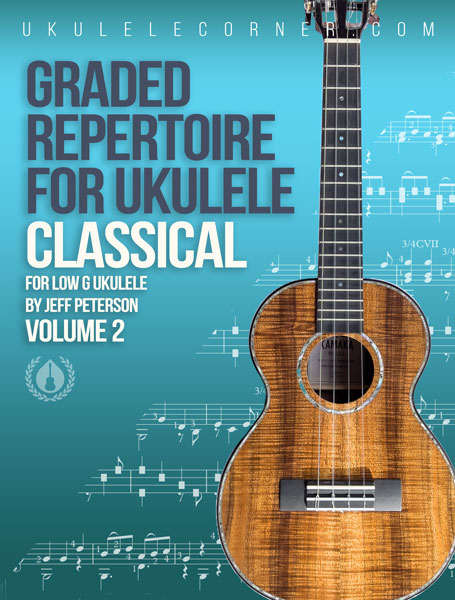
Graded Repertoire for Classical Ukulele: Volume 2
The Pavane by Fauré comes from our book Graded Repertoire for Classical Ukulele: Volume 2. The book has around 50 pieces of classical masterpieces carefully arranged for low-G ukulele in a progressive order. Starting with simple famous melodies like Bach’s Minuet in C, you progress step-by-step all the way through to classical favorites such as Weiss’s Passacaglia and Leyenda by Issac Albéniz.
Pick up your copy of Graded Repertoire for Classical Ukulele: Volume 2 here
![My Yellow Ginger Lei for Ukulele [Performance and Lesson]](https://ukulelecorner.com/wp-content/uploads/my-yellow-ginger-lei-performance-and-lesson-for-ukulele-500x383.jpg)
Leave A Comment