
Beethoven Minuet in G for Classical Ukulele (Low G)
Beethoven’s Minuet in G is one of those timeless pieces that translates beautifully to classical ukulele. In this lesson, we explore the work in low G tuning, played in the key of G, with a strong focus on left-hand fingering, rhythmic precision, and dynamic shaping.
Although many players recognize this minuet from orchestral or string settings, working through it on ukulele reveals a surprising amount of nuance—especially in the way bass lines, intervals, and melody interact.
Musical Character and Core Rhythms
A defining feature of this piece is its dotted rhythm, built around dotted eighth notes followed by sixteenth notes. This rhythmic figure appears throughout the minuet and needs to be carefully counted, especially because some phrases begin on beat three rather than beat one.
Alongside these dotted figures, Beethoven balances the texture with flowing eighth notes and steady bass movement. The contrast between rhythmic precision and lyrical motion is central to the character of the piece.
Overall Structure: Four Distinct Sections
The minuet is organized into four clear sections, each with its own technical and musical focus. Spending time on each section individually is essential before attempting to tackle the entire piece.
Section A: Thirds, Bass Motion, and Dotted Rhythm
The opening section begins with third intervals, followed by moving bass lines and repeating melodic phrases. Much of the challenge here comes from coordinating bass and melody while maintaining the dotted rhythm accurately.
Several passages require the first finger to move constantly, shifting between bass notes, partial bars, and chord shapes. There is frequent repositioning, including moments where fingers move away from a chord only to return immediately. Learning bass and melody separately at first is strongly recommended.
This section also introduces Beethoven’s dynamic shaping. Crescendos and decrescendos appear throughout, creating small swells that rise and fall within phrases. These changes are controlled primarily by the right hand.
Section B: Upper-Position Chords and Scale Movement
The second section moves higher up the fretboard and introduces partial barres, chord shifts, and scale runs. Several chord shapes are filled in gradually, starting with two-note bars and expanding into full harmonies.
Here, the left hand must stay relaxed and efficient, especially during pull-offs and descending scale passages. Dotted rhythms return, along with written ritardandos, where the music briefly slows before continuing.
Rolled chords and brushed thumb techniques can be used to bring out warmth and sustain, depending on the player’s preference.
Section C: Flowing Eighth Notes and Sustained Tone
The third section emphasizes smooth eighth-note motion paired with steady bass notes. The feel is light, playful, and melodic, but it requires careful attention to sustain and tone quality.
There are several shifts involving bars and finger substitutions, along with repeated patterns that benefit from consistent fingering choices. This section rewards a relaxed approach and a focus on producing a full, round sound rather than volume.
Return and Final Section: Sequences and Dynamic Contrast
The final section revisits earlier themes while expanding them through sequential six-interval patterns and larger position shifts. The music grows stronger dynamically before gradually softening again.
This part of the piece highlights Beethoven’s sense of balance: strong statements followed by gentle releases. Toward the end, the music slows, becomes softer, and resolves with a deliberate pause before the final note.
Practice Approach and Key Challenges
Several challenges recur throughout the minuet:
-
Constant index-finger movement that resets hand position
-
Partial bars and hinge-style barring
-
Coordinating bass lines with melodic phrasing
-
Maintaining clarity during position shifts
-
Executing written dynamics and tempo changes
A useful practice strategy is to separate bass and melody, playing up-stem and down-stem notes independently before combining them. This makes it easier to understand how the voices interact and where fingerings need extra attention.
A Worthwhile Classical Ukulele Piece
Beethoven’s Minuet in G is a celebrated work for good reason. On classical ukulele, it offers a rich combination of technical challenge and musical reward. The shifting bass lines, expressive dynamics, and elegant phrasing make it an excellent study piece for developing control, tone, and musical awareness.
With patience and careful attention to fingering and rhythm, this minuet becomes not just playable, but genuinely expressive—well worth the effort it takes to master.
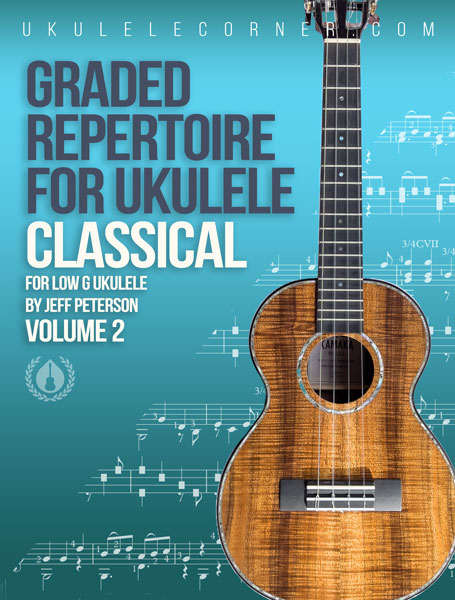
Beethoven’s Minuet comes from our Graded Repertoire for Classical Ukulele: Volume 2 book. The book has around 50 pieces of classical masterpieces carefully arranged for low-G ukulele in a progressive order. Starting with simple famous melodies like Bach’s Minuet in C, you progress step-by-step all the way through to classical favorites such as Fauré’s Pavane and Leyenda by Issac Albéniz.
Pick up your copy of Graded Repertoire for Classical Ukulele: Volume 2 here.


Leave A Comment