
Tango by Isaac Albéniz for Low-G Ukulele
Isaac Albéniz’s Tango is one of his most familiar works, and it adapts especially well to low-G ukulele. In this arrangement, it pairs naturally with La Paloma. The two pieces begin with the same D major chord phrase, and both rely on rhythmic contrast, including shifts between triplets, sixteenth notes, and dotted rhythms. That shared opening makes them feel connected in a program, but Tango quickly opens into a broader harmonic range and a more varied sequence of colors.
Background on Tango
Albéniz is closely associated with Spanish piano music, and Tango remains one of the most widely played pieces drawn from that tradition. The piece moves through a wide range of harmonic areas, including brief shifts to A, B minor, F-sharp, B-flat, G minor, and E minor. The writing also places rhythmic variety alongside those harmonic changes. You move between triplet figures, sixteenth notes, and dotted rhythms.
Performance Notes
Before you begin to play the melody, spend some time crafting a plan for your left hand. Consistent left-hand fingerings are crucial. That consistency will make the changes smoother and will also make it easier to remember the piece.
As you move from one chord to the next, look for guide fingers and common fingers. If a finger can remain in contact with the string or move by a small distance into the next shape, let it lead the shift. That approach reduces unnecessary motion and gives the left hand a clearer path through the progression.
One important example comes at the end of measure 8. Use the second finger for the last note in that measure so you can move smoothly into measure 9. That fingering helps prepare the next shape and avoids an awkward reset of the hand.
Measure 17 requires another specific left-hand setup. Here, the second finger bars three strings. You don’t always need a four-string barre, so be sure to use only what you need. Practice placing the finger with enough pressure for the required strings only, then releasing and resetting it as needed.
After you have worked through the chord shapes, practice the melody by itself. This will help you learn the phrases without also managing every harmonic detail at the same time. Once the melody feels familiar under the fingers, return to the full texture and fit it back into the chord framework.
The harmonic changes later in the piece need clear dynamic attention. At measure 52, play the modulation to B-flat loudly. Then move to a softer dynamic at the G minor chord in measure 54. Apply similar contrasts as the harmonies continue to shift.
In measure 56, use the left-hand first finger for the notes on the second string. This fingering will help keep the passage organized and will set up the line more cleanly. As with the earlier measure-specific fingerings, the goal is to prepare the hand in advance so the motion stays controlled.
At the final chord, mute the A note on the fourth string. Practice the chord slowly enough that you can place the hand, mute the string, and confirm exactly which notes are ringing.
Conclusion
This arrangement of Tango depends on careful preparation of left-hand fingerings and close attention to harmonic movement. Start by memorizing the shapes, identifying guide fingers, and learning where the unusual fingerings occur. Then practice the melody alone, and finally bring the full texture back together.
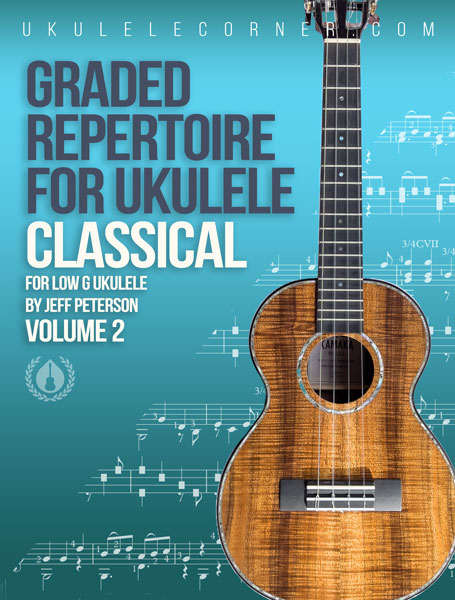
Graded Repertoire for Classical Ukulele: Volume 2
Tango by Albéniz comes from our book Graded Repertoire for Classical Ukulele: Volume 2. The book has around 50 pieces of classical masterpieces carefully arranged for low-G ukulele in a progressive order. Starting with simple famous melodies like Bach’s Minuet in C, you progress step-by-step all the way through to classical favorites such as Fauré’s Pavane and Leyenda by Issac Albéniz.
Pick up your copy of Graded Repertoire for Classical Ukulele: Volume 2 here


Leave A Comment