
Passacaglia by Weiss for Classical Ukulele
Introduction
Silvius Leopold Weiss’s Passacaglia brings one of the great Baroque lute traditions into a new setting for classical ukulele. Originally composed for lute in D major, this arrangement transposes the piece to G, placing the music in a range that suits low-G ukulele while preserving the repeating bass pattern and variation structure that define the form.
Background on Weiss and the Passacaglia
Silvius Leopold Weiss was one of the most important lutenists and composers of the Baroque era. His music belongs to a highly developed lute tradition, full of contrapuntal writing, idiomatic textures, and rich harmonic language. In this Passacaglia, those qualities appear through a repeating bass line with variations in the upper voice.
The passacaglia was a dance that originated in early seventeenth-century Spain and later developed into a variation form often built on a repeating bass or ostinato, usually in triple meter. In Weiss’s piece, the 3/4 meter and recurring bass pattern give the music a stable foundation. Above that foundation, each variation introduces new textures, rhythms, suspensions, and melodic gestures.
This ukulele arrangement sets out the twelve variations into seven-measure phrases. Treat each phrase like its own study. The repeating structure makes the piece easier to understand, but not necessarily easier to play. Each return of the pattern asks for a new color, a new technical solution, or a new dynamic shape.
Understanding the Form
The repeated bass line gives the piece its identity, so when you first begin working on the piece, you should really get to know the bass line.
Because the phrases are seven measures long, the structure may feel slightly less predictable than an eight-measure phrase. Count carefully and notice where each variation begins and ends.
The harmonic suspensions are one of the most expressive features of the piece. Let these dissonances rise in intensity, then release as they resolve. Shape each phrase with dynamic growth and decay rather than playing the variations at one general volume.
Tempo, Tone, and Character
A slow tempo, around 50 beats per minute, works well for this arrangement. The slower pace gives the harmonies time to speak and allows enough room for the left-hand stretches, slurs, and cascading sixteenth notes.
Avoid rushing through the active passages. The sixteenth-note runs should flow, but they should not lose the underlying pulse. Keep the pulse steady, especially when rhythms becomes more elaborate.
Use tone color to distinguish the variations. Some sections can sound more intimate and warm, while others need a clearer, more direct attack. The repeating bass pattern gives the piece continuity, but your tone and dynamics help each variation take on its own character.
Left-Hand Stretches and Positioning
The arrangement includes demanding left-hand stretches. One of the most significant comes in measure 6, where the hand reaches from the 4th fret to the 10th fret. Approach this kind of stretch with care.
Do not stretch by forcing the pinky away from the hand. Instead, keep the thumb low on the back of the neck and open the hand parallel to the fingerboard, almost like an accordion. This allows the fingers to spread from a balanced hand position rather than from tension.
If a stretch is too difficult, omit the bass note when needed. Preserve the musical flow first. A clean upper voice and a steady pulse will serve the piece better than a forced reach that interrupts the phrase.
Slurs, Alternation, and Sustained Voices
Use slurs to help the sixteenth-note runs flow more easily. They reduce the burden on the right hand and create a smoother line. Keep the slurs rhythmically clear, and make sure the second note of each slur still speaks.
At measure 29, use index-middle alternation in the right hand. Play repeated notes softly so they do not become heavy or mechanical. The goal is clarity without accenting every repetition.
Sustain is especially important in this arrangement. Keep fingers down when they are still serving the harmony, and avoid releasing notes too early. In phrases such as measure 33, maintain finger positions so the overlapping voices continue to ring. This will help the ukulele suggest the resonance of the original lute texture.
Building Toward the Peak
The variation at measure 64 marks the peak of the composition. Begin forte and gradually decrescendo as the lines descend. This gives the section a clear dramatic shape and helps the listener hear it as a structural high point rather than simply another variation.
Do not save all of the expression for the end. Each variation needs its own rise and fall. However, measure 64 should feel like the broadest arrival in the piece, with the strongest tone and the most commanding presence.
At measure 78, slow down slightly for the grand recapitulation of the original melody. Let the return feel spacious. In the final two measures, use a long ritardando, extend the trill on beat 2, and arpeggiate the final chord so the ending has weight and resolution.
Conclusion
Weiss’s Passacaglia is a rewarding work for classical ukulele because it combines structure, expression, and technical depth. The repeating bass line gives you a clear foundation, while the variations challenge you to shape harmony, sustain voices, manage stretches, and work on musical stamina.
Study each seven-measure phrase closely. Listen for the suspensions, protect the sustain, and let the dynamics clarify the form. With a steady tempo and careful attention to tone, this arrangement can bring the depth of Baroque lute writing into the voice of the low-G ukulele.
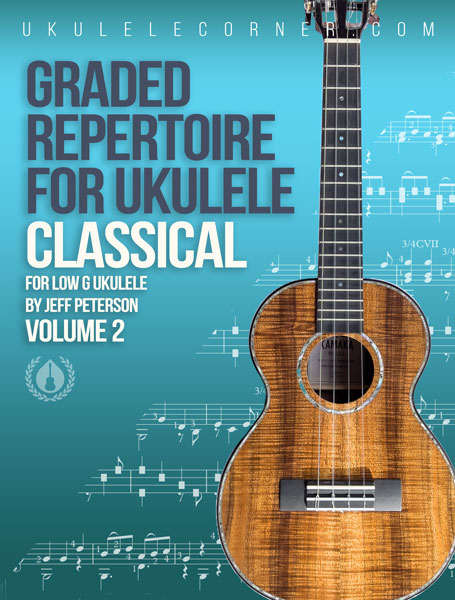
Graded Repertoire for Classical Ukulele: Volume 2
Passacaglia by Weiss comes from our book Graded Repertoire for Classical Ukulele: Volume 2. The book has around 50 pieces of classical masterpieces carefully arranged for low-G ukulele in a progressive order. Starting with simple famous melodies like Bach’s Minuet in C, you progress step-by-step all the way through to classical favorites such as Fauré’s Pavane and Leyenda by Issac Albéniz.
Pick up your copy of Graded Repertoire for Classical Ukulele: Volume 2 here


Leave A Comment