
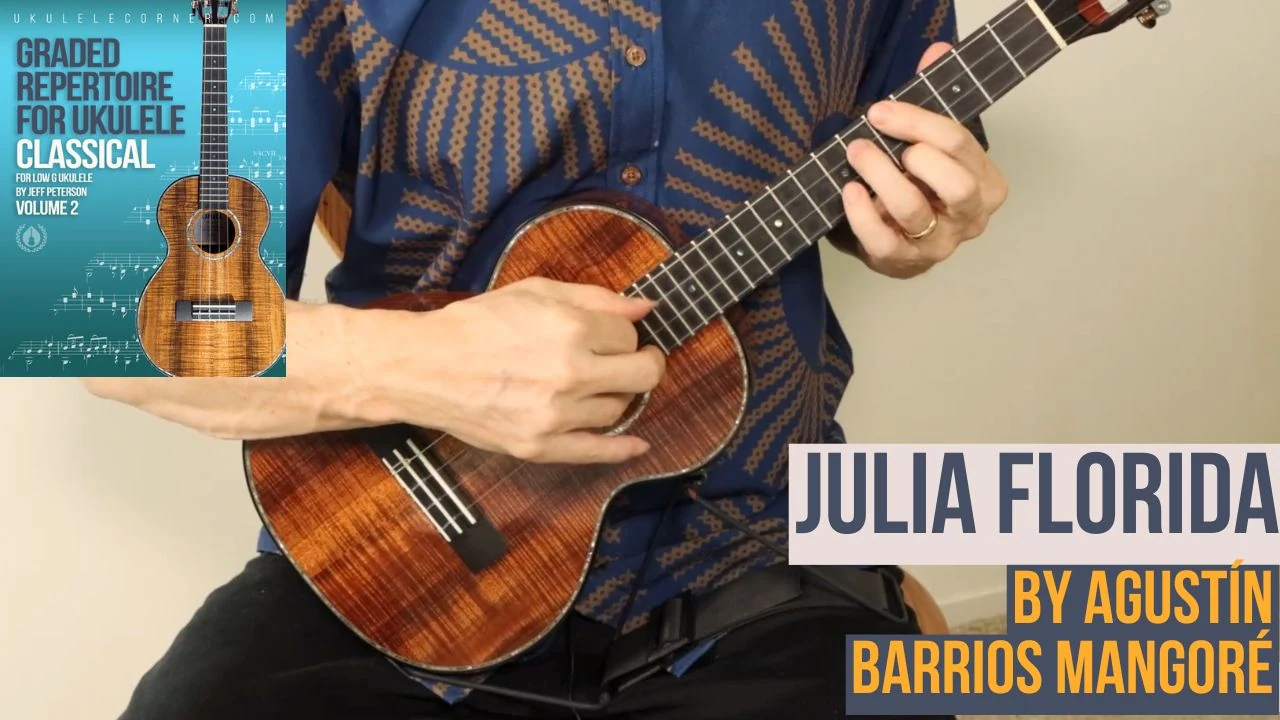
Julia Florida by Barrios for Classical Ukulele
Introduction
Agustín Barrios composed Julia Florida in 1938 and dedicated it to his student Julia Martinez. Written during a difficult period in his life, the piece has a lyrical character that fits nicely on the ʻukulele. In this arrangement, the piece is set in G, allowing the melody, open strings, and higher fretted notes to have a singing quality.
The music is a barcarolle, or boat song, and the 6/8 time signature, with six eighth notes in each measure, helps the music feel like a boat gently rocking on the waters. Keep that gentle rocking feel in mind as you play. The piece gives you room for rubato, but the rhythm should still feel clear beneath any expressive elements you add.
Tone and Opening Phrases
Begin with a sweet tone. In the opening measure, let the third note at the 7th fret sustain as you move to the higher chord on beat 4.
Use a slight rallentando in measure 3. The slides in that measure should feel like light grace notes leading into the main melody. Keep them delicate, and don’t accent the slide by making it too heavy.
Left-Hand Preparation and Sustained Notes
Left-hand preparation is central to this arrangement. In measure 8, prepare the 4th finger for the E minor chord so the other fingers remain available for the higher notes. This kind of left-hand preparation makes the phrase smoother and keeps the melody from sounding interrupted.
In measure 10, the slide leads to an open string, creating the note A. In the following measure, articulate the 12th-fret note on the 4th string after a light slide from the 9th fret. The balance between fretted notes and open strings is delicate here. Play the open strings softly enough that the higher fretted notes can continue to ring.
Pay close attention to the transition into measure 16. After the slide, articulate the first note of measure 17 clearly.
Rolled Chords and Expressive Bass Notes
All of the four-note chords can be rolled so the bass and melody notes remain distinct. Let the bass sound slightly ahead of the beat for expression: this gives the chord more direction and helps separate the melody from the bass.
As the piece moves into the E minor section at measure 31, build intensity with a crescendo. Use the 1st finger for the bass note in the first ending. In the second ending, use the 2nd finger for the A7 chord. These fingerings help set up the hand for what follows.
Position Shifts and Embellishments
Starting at the second ending, it will be easier if you memorize the larger position shifts so that your attention can stay on the left hand. This section contains quick pull-offs, slides, and embellishments. In measure 37, keep the pull-offs light and quick. Treat the other ornaments in this section the same way: they should decorate the line without slowing it down.
In measure 47, don’t articulate the 6th fret during the slide. Let the motion carry you to the destination note, then sustain the note once it arrives. In measure 50, you can create an echo effect for contrast. Give shape to measures 51-56 with a nice dynamic rise and fall before the D.C. al Coda.
Coda and Ending
In measure 57, slide with the 2nd finger so the hand is ready for the open-string chord on beat 4.
End softly with the octave G notes. The close of the piece should feel calm and lyrical, in keeping with the character established at the beginning.
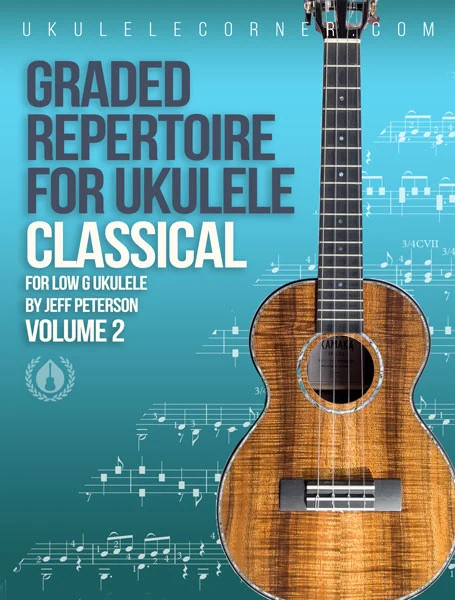
Graded Repertoire for Classical Ukulele: Volume 2
Julia Florida by Barrios comes from our book Graded Repertoire for Classical Ukulele: Volume 2. The book has around 50 pieces of classical masterpieces carefully arranged for low-G ukulele in a progressive order. Starting with simple famous melodies like Bach’s Minuet in C, you progress step-by-step all the way through to classical favorites such as Fauré’s Pavane and Leyenda by Issac Albéniz.
Pick up your copy of Graded Repertoire for Classical Ukulele: Volume 2 here