
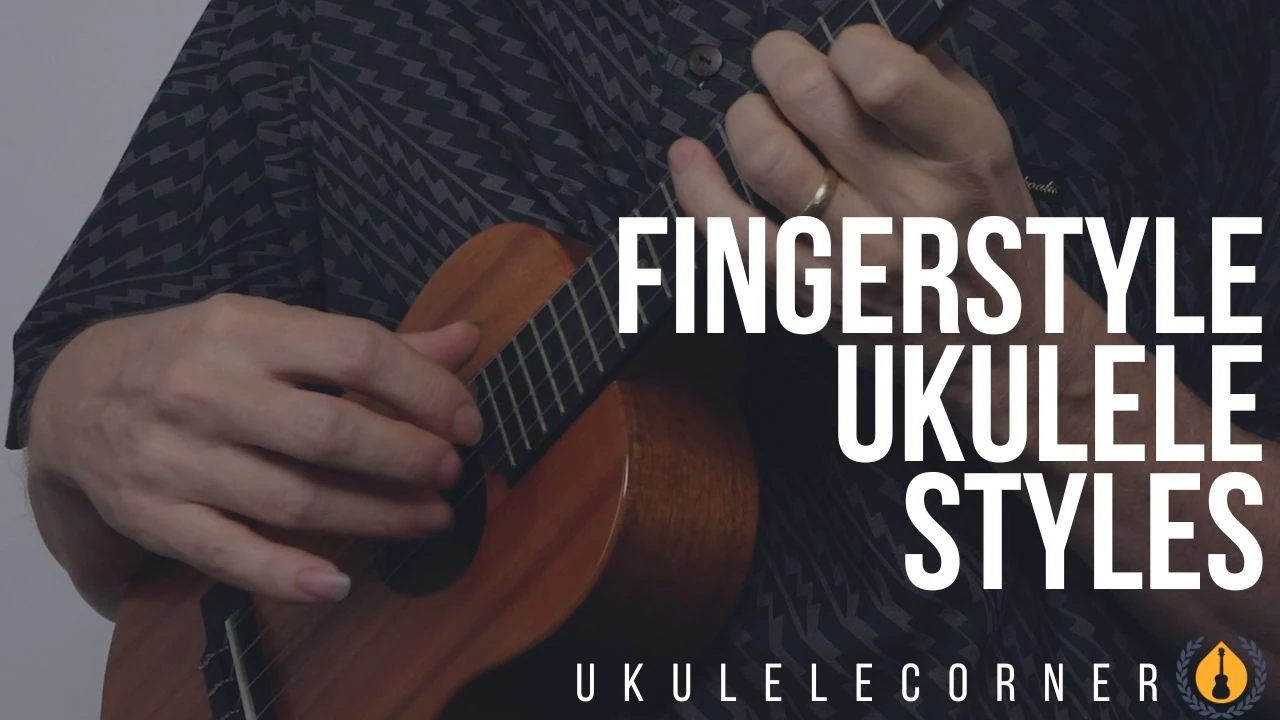
Fingerstyle Ukulele Styles: Explore Different Ways to Play
Fingerstyle ukulele describes a particular technical approach to playing the ukulele. And essentially it’s about playing with the fingers in the right (or picking) hand, but it’s also more than that. Once you can play a melody with the fingers and a bass line with the thumb underneath it, that skill opens the door to many different kinds of music.
Over the past two decades, arrangers have taken fingerstyle ukulele in a lot of directions. John King brought Bach to the instrument. Jake Shimabukuro introduced Beatles and Queen covers. Benny Chong reworked jazz and Brazilian standards. James Hill carried bluegrass over from the banjo world. Herb Ohta, Jr. and Ledward Kaapana built out the Hawaiian repertoire. You can read more about that evolution at Fingerstyle Ukulele.
Think of fingerstyle technique like a big tree, with each style branching off in its own direction. Hawaiian playing leans on vamps and rolling strums. Classical playing draws on centuries of composed repertoire. Blues brings alternating bass lines and blue notes. Slack key opens up the tuning itself. Folk and traditional music borrows melodies from across the world.
This guide walks through what makes each of those styles distinct, with links to real arrangements and lessons for each one. Use it as a map, and follow whichever branch interests you most.
Hawaiian Fingerstyle Ukulele
Hawaiian style is where fingerstyle ukulele playing began. Ernest Kaʻai, one of the earliest authorities on the instrument, published his first ukulele method book in 1906 and taught well into the 1940s. Kalani Peterson, another early Hawaiian ukulele and steel guitar performer, played for U.S. presidents Taft, Harding, and Coolidge in the early 1900s. The Hawaiian Music Renaissance of the 1970s, led by players like Peter Moon, sparked new interest in the tradition and inspired the generation of arrangers working today.
A few techniques set Hawaiian playing apart from other styles. The Hawaiian double strum, sometimes called the gallop strum, gives songs their rolling, danceable feel. Another distinctive technique is the Hawaiian vamp, a short chord turnaround, often resolving from a dominant seventh back to the tonic. The vamp gives a singer or player enough room to improvise before the next verse. A lot of Hawaiian melodies tend to sit close to the vocal line, since so much of this repertoire began as songs meant to be sung, danced to, or both.
Read the full history and background at Hawaiian Ukulele.
Explore Hawaiian technique:
Explore Hawaiian repertoire:
Classical Ukulele
Classical ukulele borrows its repertoire from centuries of guitar and lute music. Arrangements span the Baroque period through the early 20th century, with composers including Johann Sebastian Bach, Wolfgang Amadeus Mozart, Ludwig van Beethoven, Francisco Tárrega, Fernando Sor, Matteo Carcassi, Agustín Barrios, and many others.
Technique defines classical playing more than anything else. It centers on independence between the thumb and fingers in the plucking hand, and left-hand fingers that are equally capable of moving independently. Because classical music sticks to a score (and improvisation is much rarer), it is important to learn to read notation for classical music. This also means fingerings (in both hands) are usually planned out in advance.
Read more about how classical repertoire translates to ukulele at Classical Ukulele: Can You Play Classical Music on the Ukulele?, and dig deeper into the technique itself at Classical Ukulele Technique.
Explore Classical repertoire:
- Für Elise by Beethoven
- Gavotte by J.S. Bach
- Arioso by J.S. Bach
- Recuerdos de la Alhambra by Francisco Tárrega
- Capricho Árabe by Francisco Tárrega
- Etude 16 by Matteo Carcassi
- Danza Paraguaya by Agustín Barrios
- Clair de Lune by Debussy
- Canon in D by Johann Pachelbel
For a fun list of familiar classical pieces for ukulele, check out our The Top 10 Classical Pieces for Ukulele.
Blues on Fingerstyle Ukulele
Blues fingerstyle arrangements on ukulele draw from the alternating-thumb picking style used by Delta blues guitarists of the 1930s. The thumb keeps a steady beat while the fingers pick out melody and licks above it, a technique often called Travis picking after guitarist Merle Travis. The ukulele’s strings sit higher than a guitar’s low bass strings, so that steady thumb pattern moves across the top two or three strings and keeps the same driving, rolling feel.
A blues progression typically runs 12 bars, moving through the I, IV, and V chords in a set pattern. Many arrangements enhance the rhythmic structure with a shuffle feel, dwelling on the I chord longer before moving to the IV, or an extended turnaround built from riffs and licks at the end of the progression. Bends, slides, and blue notes drawn from the blues scale give the style its expressive, vocal-like quality.
See these ideas at work in full arrangements:
Slack Key Ukulele (Ki Hoʻalu)
Slack key, or ki hoʻalu, is a Hawaiian tradition built around open tunings. The name comes from loosening, or slackening, certain strings away from standard tuning to create an open chord. The style began as private, family entertainment on guitar. Gabby Pahinui’s records in the late 1940s carried it to a much wider audience, and the Hawaiian Music Renaissance of the 1970s spread it further still.
On ukulele, the most common entry point is open C tuning: G, C, E, G. Only the top string moves, dropping a whole step from A down to G, and the open strings ring out as a C chord before you fret a single note. From there, the I, IV, and V chords in the keys of C and F fall into comfortable open-string shapes: C, F, and G7 in the key of C, and F, B♭, and C7 in the key of F. That includes a B♭ that would otherwise require a barre chord in standard tuning.
A distinctive feature of this style is a vocal quality to the chords themselves, where smaller melodies are embedded in lines on top of chords (like G7 to G9 and back). Traditional pieces like “Pua Hone” and “Waimanalo Blues” show this melodic, conversational quality in action.
A full introduction to the tuning, chord shapes, and technique is at Slack Key Ukulele.
Folk and Traditional Ukulele
Folk repertoire spans continents and centuries, but it shares a few qualities that make it a natural fit for fingerstyle ukulele: familiar melodies with simple chord progressions that allow for solo arrangements on the instrument.
American Folk
American folk and roots songs pair recognizable melodies with straightforward chord changes, which makes them a natural bridge for players moving from strumming into fingerstyle. See that bridge in action at From Strumming to Fingerstyle Ukulele.
Irish, Scottish, and English Ballads
Ballads from the British Isles tend to favor modal melodies, minor keys, and long narrative verses, which gives them a different color from the major-key folk songs of American tradition.
Holiday and Festive Music
Christmas carols and holiday standards make up their own well-loved branch of traditional repertoire, since most carols grew out of folk melody and hymnody in the first place. A full collection is available in the book 30 Christmas Songs for Fingerstyle Ukulele. Most all of the pieces below have both performances and tutorials so you can learn to play these holiday songs:
- Greensleeves
- Auld Lang Syne
- Silent Night
- Joy to the World
- Deck the Halls
- God Rest Ye Merry Gentlemen
- Angels We Have Heard on High
- It Came Upon a Midnight Clear
- Have Yourself a Merry Little Christmas
- O Holy Night
Other Traditional Music
But there is so much more traditional music from around world and a lot of it translates from classical guitar to ukulele music, including Brazilian and Spanish folk traditions:
Where This Fits in Your Fingerstyle Journey
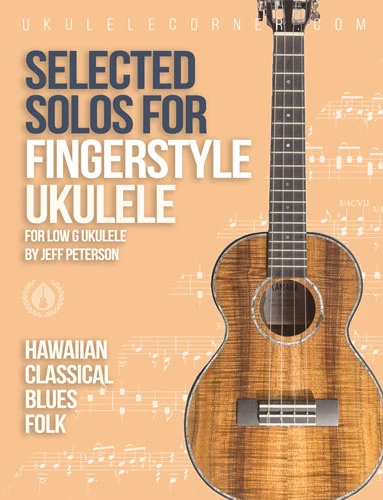
Fingerstyle ukulele technique gives you the foundation to play so many different styles of music. We have looked at a few, but there are others that would fit here as well. What they have in common is an independent movement of the thumb and fingers that provide a right hand capable of playing more than one voice at a time. Building that foundation can take your music in so many places. Ready to learn more? Start with our guides on How to Learn Fingerstyle Ukulele and Fingerstyle Ukulele Technique: A Complete Guide.
If you’re ready to go even deeper, our curriculum at Ukulele Corner Academy is built around helping you to begin and succeed with fingerstyle ukulele, and incorporates all the above styles and more. Join Ukulele Corner Academy today!
I play and teach basic strumming – I would love to advance my personal skills but I am ninety years old and struggle with modern technology – Can you please inform me how I subscribe to your academy and start to enhance my ukulele experience.
I am a retired psychologist but have sixty years of experience in the Scottish Folk scene
Hi Watt,
You can find links to the Academy home page with information on joining the academy by clicking on the link on the Academy link on the Ukulele Corner homepage.
ukulelecorner.com/academy/